Booking choice: The Old Town walk with castle and cable car, ★ 4.7 (1,085). Check dates Compare the options below
For more than three centuries the fortress on top of Montjuïc watched over Barcelona's port, and at times over the city itself. Today it belongs to the city, and its walls, moat and terraces are one of the calmest places on the hill.
This guide explains what you see inside, how long to stay, when a guided visit is worth it, and the history behind the stones. How the ride up works is in the Montjuïc cable car guide, and what to see on the way down is in things to do in Montjuïc.
The quick answer
What it is: a military fortress about 173 metres above the sea, not a palace, with no furnished rooms. Inside: the bridge and gate, the moat garden, four bastions, the parade ground, the watchtower terrace, the sea wall and a six-room exhibition open since 26 April 2026. Time: about an hour and a half on your own. Guided tours: weekends and public holidays, about an hour, the only way into the dungeons and the cisterns. Hours: 10:00 to 20:00 from March to October, 10:00 to 18:00 from November to February, closed on 25 December and 1 January. Tickets: the castle has its own ticket, separate from the cable car. The castle sets some admission days each month; check the castle's own website before you go. Getting up: funicular from Paral·lel and the cable car, or bus 150. Cancellation: full refund if you cancel up to 24 hours ahead on every tour listed here.
What can you see inside Montjuïc Castle?
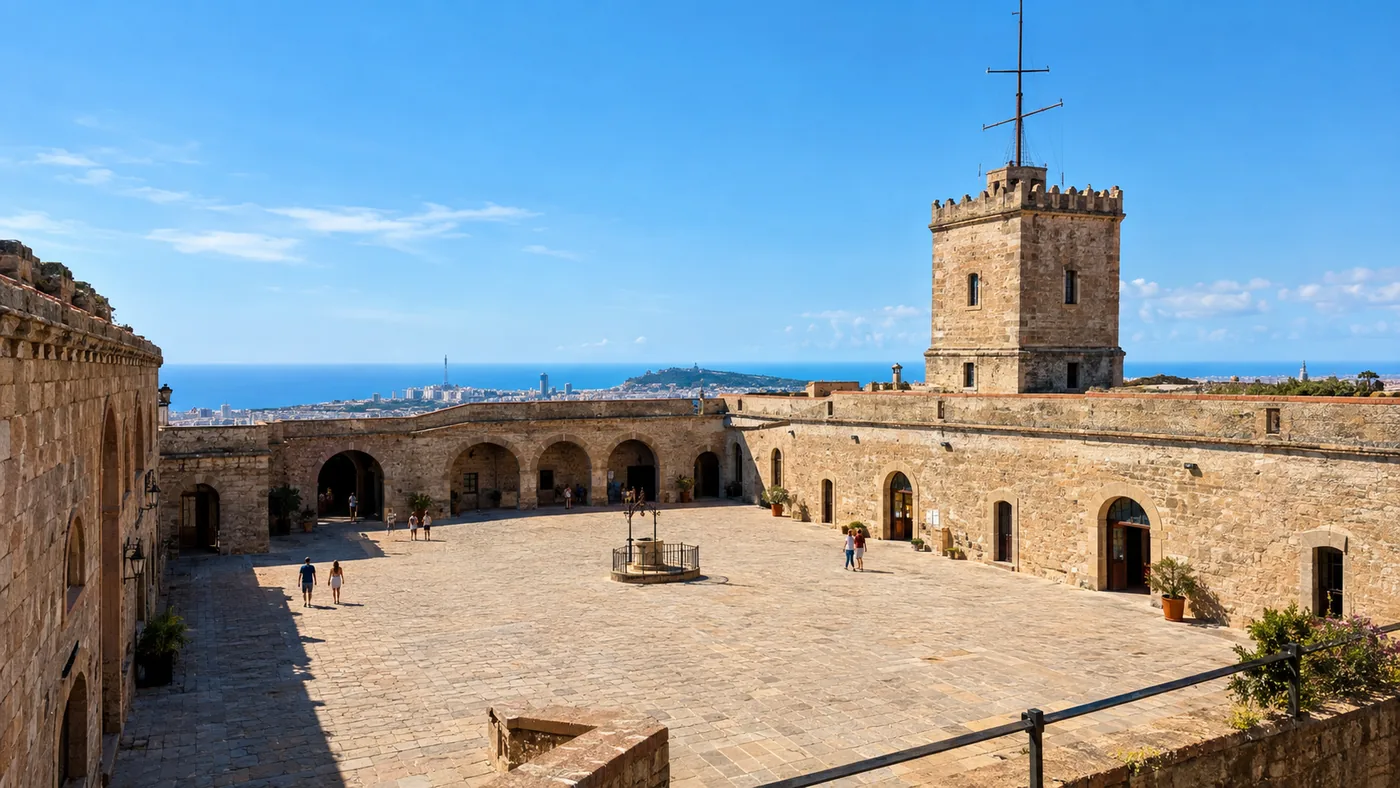
A fortress, not a palace: walls, a moat garden, four bastions, the parade ground, the watchtower and a history exhibition renewed in April 2026. There are no furnished rooms; the draw is the stone, the stories and the views.
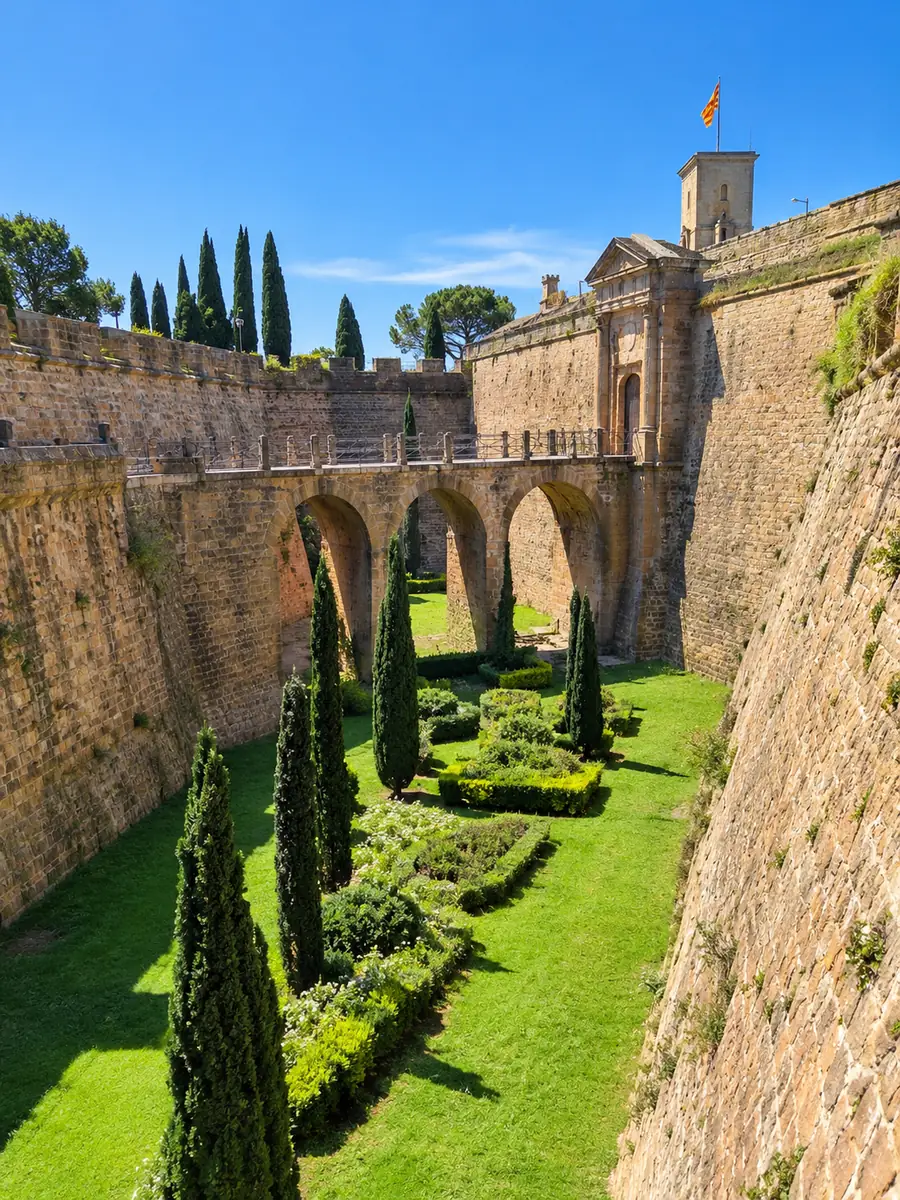
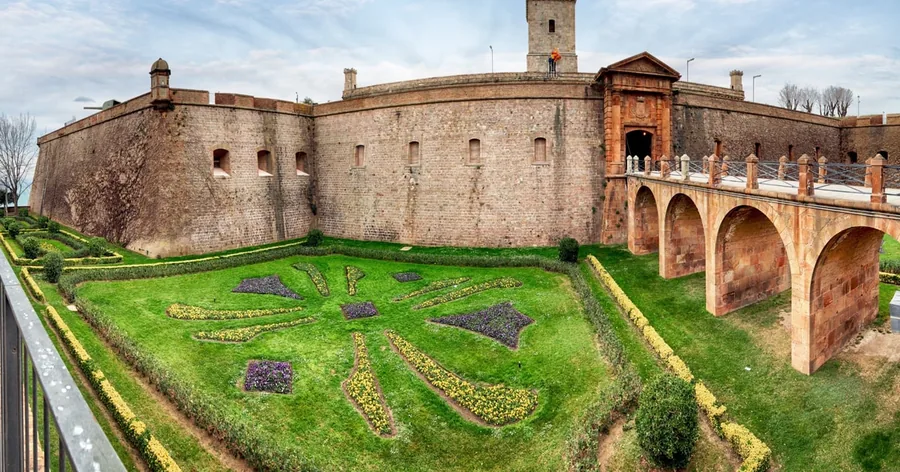
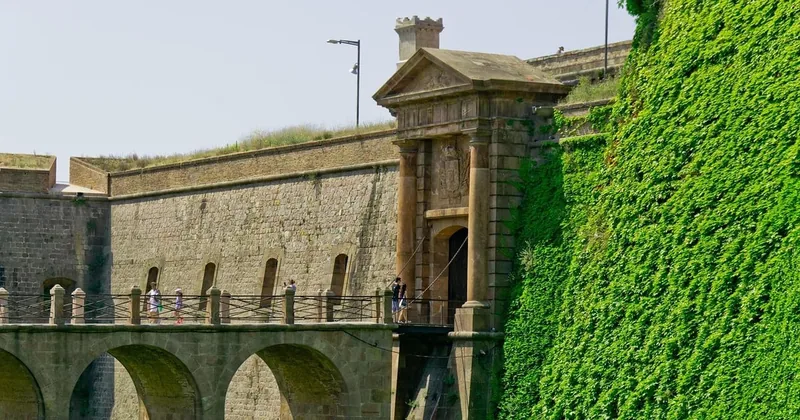
You enter over a stone bridge across the moat, built when the engineer Juan Martín Cermeño rebuilt the fortress from 1751. The moat is now a garden, used for events, open-air cinema and concerts. Inside the gate lies the Pati d'Armes, the parade ground, ringed by vaulted rooms, with the watchtower and its terrace above. Paths lead along the ramparts to the bastions, the sea wall of about 155 m facing the port, the ravelin and the covered way.
Look out for a sculpture recalling the 1792 survey of the meridian, which helped define the metre. Much of the fortress is outdoors, with cobbles, ramps and steps, so wear comfortable shoes and bring a hat on sunny days.
What is in the new castle exhibition?
A six-room exhibition in the Interpretation Centre on the parade ground, open since 26 April 2026. It tells the history of the hill, the building of the fortress, its use for repression and as a prison, and its return to the city as a public space.
The Interpretation Centre, known as the CIM, closed in November 2025 for a full renewal. The new rooms open off the Pati d'Armes and are covered by the castle ticket. The last room keeps a section of the 17th-century bastion on view, a reminder that today's fortress was built over an older one.
If you like history, start here before you walk the ramparts: the walls make much more sense once you know who built them and why. If you are mainly here for the views, a quick walk through the rooms is enough.
A guide walks you from La Rambla through the Raval, up by funicular and cable car and into the castle, with both rides and the entry included.
Check dates for the Old Town walk with castle and cable carHow much time does it take to visit Montjuïc Castle?
Allow about an hour and a half on your own. A quick loop takes about an hour; the exhibition and a full walk round the bastions take you closer to two hours.
Come early if you can. The castle opens at 10:00, the light over the port is clear in the morning, and the paths are quieter before the middle of the day. In summer the upper terraces have little shade, so a morning visit is also cooler.
Add the journey up and down. The funicular takes about 2 minutes and the cable car only a few more, but allow extra time for queues at the base station on busy days. Walking down to Plaça d'Espanya past the gardens, the Fundació Joan Miró and the Palau Nacional is easy and can fill a whole afternoon with stops.
How long is the Montjuïc Castle tour?
The castle's own guided tour lasts about an hour, on weekends and public holidays, in several languages including English. Tours sold on GetYourGuide run from 2.5 to 5.5 hours because they add the rides and, on some, the old town.
The official guided tour is the only way into the dungeons and the cisterns, and usually to the top of the watchtower; visitors on their own cannot enter them. It has its own ticket, and slot times change, so check the castle's official website. During the Viu Montjuïc culture weekend on 3 and 4 October 2026, the programme of more than 100 activities includes castle guided tours.
On GetYourGuide, the Old Town walk with castle and cable car takes 3.5 hours with a visit of the castle and the watchtower views. The evening option, the cable car, castle and Magic Fountain tour, takes 5.5 hours and includes the dungeons. For your own guide, the private castle tour with cable car (4.7 from only 10 reviews) takes 2.5 hours with skip-the-line castle tickets, or 3.5 hours with hotel pickup.
| Part of the castle | What you see | On your own or guided |
|---|---|---|
| Bridge, gate and moat garden | The 18th-century bridge and the grassy moat between sloping walls | On your own |
| Pati d'Armes | The parade ground ringed by vaulted rooms | On your own |
| Interpretation Centre | Six rooms on the hill, the fortress, the prison years and the return to the city | On your own |
| Ramparts and bastions | Four bastions, the sea wall and views over the port | On your own |
| Watchtower | Wide views of the port, the city and the sea from the terrace | Terrace on your own; the top usually on guided visits only |
| Dungeons and cisterns | The underground spaces of the fortress | Guided visits only |

Afternoon into evening: an Old Town walk, funicular and cable car tickets, the castle with its dungeons, a snack with local wine or beer, then the Magic Fountain on show evenings. Rated 4.5 from 223 reviews.
Explore the castle and Magic Fountain eveningDo you have to pay to enter Montjuïc Castle?
The castle has its own entry ticket, separate from the cable car. The castle sets some admission days each month; check the castle's own website before you go.
The ticket covers the permanent and temporary exhibitions; guided tours have their own ticket. Buying online ahead saves the queue at the gate on busy weekends. The cable car is a different ticket, and the most booked one, the Montjuïc cable car return ticket, does not include castle entry.
If you want one booking for everything, choose a tour that lists the castle visit among its inclusions. Not every Montjuïc tour does: several e-bike and walking tours stop only outside the walls. Montjuïc tours compared shows which ones go in.
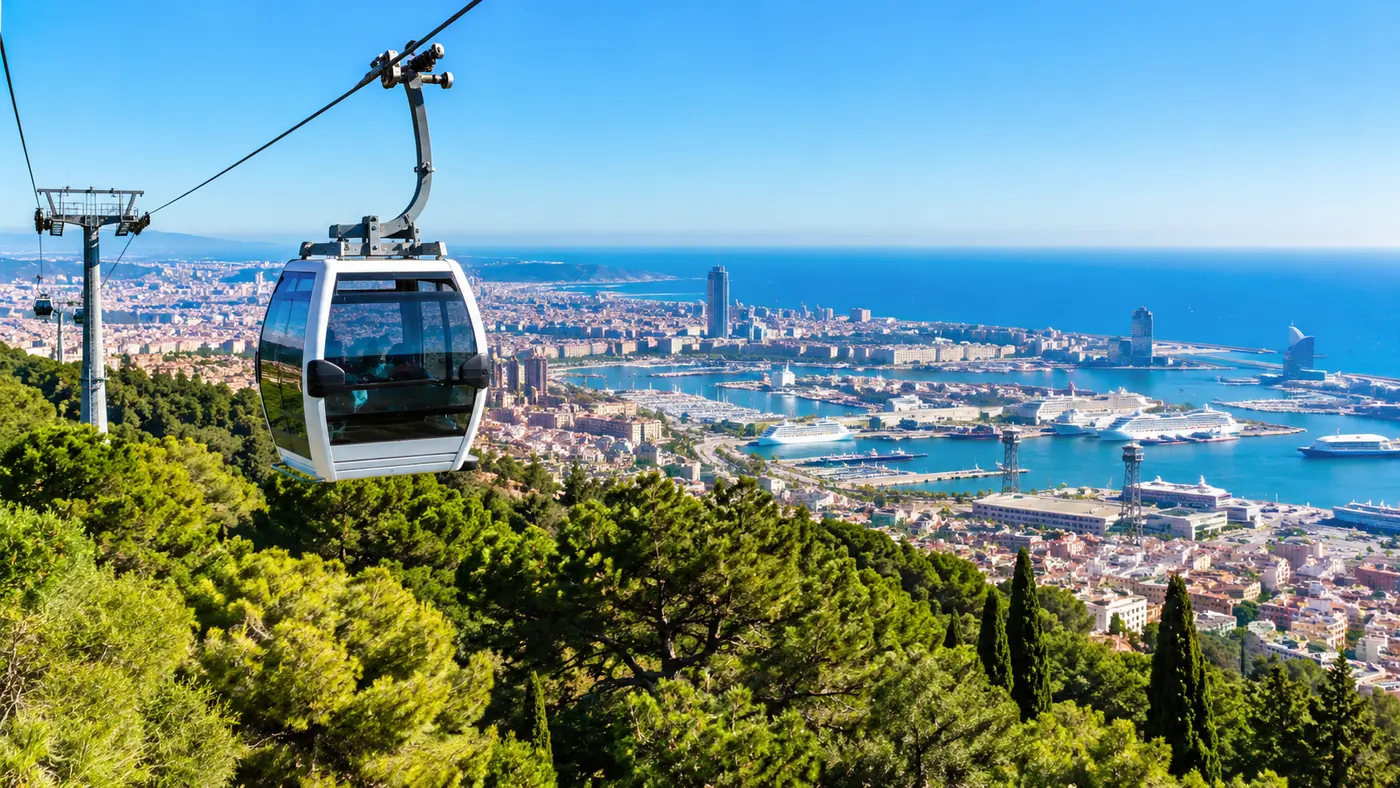
The quickest climb to the castle gate: a return cable car ride over the pines, valid for one day, with castle entry bought separately.
Check dates for the Montjuïc cable car ticketWhat is the history of Montjuïc Castle?
A fort built in a few weeks in 1640, enlarged into a castle in 1694 and rebuilt from 1751 into today's fortress. Later it was a prison and a place of executions, then a military museum, and since 2007/2008 it has belonged to the city.
- 1640: a fort is built in a few weeks during the Reapers' War, and in January 1641 it sees its first battle.
- 1694: the fort is enlarged and becomes a castle.
- 1705: Anglo-Allied forces take it during the War of the Spanish Succession.
- 1714: after the fall of Barcelona, the castle is used to control the city.
- From 1751: the engineer Juan Martín Cermeño rebuilds it into the fortress you see today, with its moat, cisterns and bridge.
- Late 19th century: the castle serves as a prison, with trials and executions.
- 15 October 1940: Lluís Companys, President of Catalonia, is executed in the castle moat.
- 1963: a military museum opens in the castle.
- 2007/2008: the Spanish state hands the castle over to Barcelona City Council.
For the wider story, the Spanish Civil War walking tour (4.9 from 304 reviews) follows the war and the dictatorship through the Old Town streets, with old photos at every stop.
The castle's darkest chapter makes more sense on a historian-led walk through the Old Town streets marked by the Civil War and the dictatorship.
Check dates for the Civil War history walkWhat are the views like from Montjuïc Castle?
Among the widest in Barcelona. From the watchtower terrace and the ramparts you look over the port, the sea, the whole city and the Collserola hills, and the flagship tour's listing says you can see the Pyrenees on clear days.
The castle stands about 173 metres above the sea, right above the port, so the ships, the cranes and the coast lie almost at your feet. On the city side you can pick out the Sagrada Família and the towers along the seafront. The terraces face different directions, so walk the whole circuit before you choose a spot for photos.
From November to February the castle and cable car close at 18:00, so plan your visit for earlier in the afternoon and watch the sunset from the MNAC steps or the Mirador de l'Alcalde. The best times for each part of the hill are in the Magic Fountain guide.

How do you get up to Montjuïc Castle?
Ride up and walk down. Take metro L2 or L3 to Paral·lel, the funicular to Parc de Montjuïc and the cable car to the castle, or bus 150 from Plaça d'Espanya, which stops at the castle.
The funicular counts as a regular metro journey and takes about 2 minutes. It reopened on 13 April 2026 after almost six months of works and runs as normal. From its top station the cable car base is a short walk, and the ride up takes only a few minutes. Bus 150 runs from Plaça d'Espanya and stops at the castle, which helps when the cable car closes for about a month each year, usually in February, for its safety inspection.
Walking up from Plaça d'Espanya or Poble-sec is long and steep in parts. Walking down is easy and pleasant: past the Mirador de l'Alcalde, the gardens, the Fundació Joan Miró and the Olympic Ring to the Palau Nacional. The details of the rides are in the Montjuïc cable car guide.
Frequently asked questions
Is Montjuïc Castle a palace?
No. It is a military fortress with walls, a moat, bastions and a parade ground, but no furnished rooms.
Can you see the dungeons of Montjuïc Castle on your own?
No. The dungeons and the cisterns open only on guided visits, such as the castle's weekend tours or the evening tour with the Magic Fountain.
What time does Montjuïc Castle close?
At 20:00 from March to October and at 18:00 from November to February. It is closed on 25 December and 1 January.
Where was Lluís Companys executed?
In the moat of Montjuïc Castle, on 15 October 1940. He was President of Catalonia.
Ready to book
Choose your tour
Check your date and the live price on GetYourGuide; the refund terms are shown on each option.
Old Town Walk, Montjuïc Castle and Cable Car
- A professional guide, groups of up to 15
- Walk past La Boqueria, the Liceu and Palau Güell
- Funicular ride from Paral·lel to Parc de Montjuïc
Cable Car, Castle Visit and Magic Fountain
Old Town walk, funicular and cable car, the castle and its dungeons, a wine or beer stop, then the fountain on show evenings